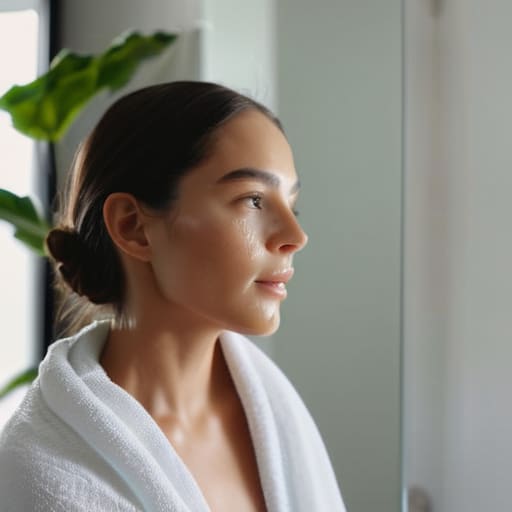
I still remember sitting on my bathroom floor in my early twenties, staring at a face that felt tight, angry, and perpetually flaky. I had spent a small fortune on every “miracle” serum the internet threw at me, convinced that if I just applied enough harsh actives, my skin would finally behave. I was chasing trends instead of listening to what my body was actually trying to tell me. The truth is, most of the marketing noise makes it feel like you need a chemistry degree just to figure out how to identify your skin type, when really, you just need to stop and listen.
I’m not here to sell you a twenty-step ritual or a cabinet full of expensive bottles you don’t actually need. Instead, I want to help you strip away the confusion and get back to the basics of what actually works. In this post, I’m sharing a simple, grounded way to understand your skin’s unique rhythm so you can stop the guesswork. We’re going to focus on science-backed simplicity to help you find that sense of calm in your morning routine, ensuring you spend your energy on products that actually serve you.
Determining Skin Type at Home Without the Stress

You don’t need a laboratory or a fancy dermatologist’s kit to figure this out. In fact, I’ve found that the best way to approach determining skin type at home is to simply listen to what your face is telling you after a long day. I like to use the “bare-faced method.” It’s simple: wash your face with a gentle, pH-balanced cleanser, pat it dry, and then—this is the crucial part—don’t apply a single drop of product. Just let your skin exist.
Wait about an hour while you sip your coffee or tend to your herbs. During this window, pay close attention to how your skin feels as it settles. Are you feeling a tight, pulling sensation? That’s a classic sign of dryness. Or is there a noticeable shine appearing around your nose and forehead? That’s your cue to look into combination skin characteristics. If your skin feels itchy or looks slightly red, you might be dealing with sensitivity. By observing these subtle shifts in your natural oils and texture, you can skip the guesswork and finally build a routine that actually feels like a moment of peace rather than a math problem.
A Gentle Skin Moisture Levels Assessment

Once you’ve washed your face and let it air-dry for about half an hour, it’s time for a little observation. This is my favorite part of a skin moisture levels assessment because it’s quiet and requires zero extra products. Take a moment to just feel your face. Does it feel tight, almost like your skin is a size too small? Or does it feel supple and bouncy? If you notice that “tight” sensation specifically around your cheeks while your forehead feels fine, you’re likely navigating some common combination skin characteristics.
Pay close attention to how your skin reacts to the air in your room. If you see flaking or notice a dullness that won’t go away even after applying moisturizer, you might be dealing with true dryness. However, if you notice a shine developing in your T-zone, that’s a sign of active oil production. Understanding these subtle cues is much more effective than just guessing based on a few breakouts. It’s about learning to listen to what your skin is telling you rather than forcing it to conform to a trend.
My Little Cheat Sheet for Reading Your Skin's Signals
- Pay attention to how your face feels mid-afternoon. If you’re reaching for blotting papers by 3 PM, you’re likely leaning towards oily; if your skin feels tight and itchy, you’re probably on the dry side.
- Look for the “glow” vs. the “shine.” A healthy, dewy glow is great, but if your forehead and nose look like a mirror, that’s a clear sign of excess sebum production.
- Don’t mistake dehydration for dryness. If your skin feels tight but still looks a bit greasy, your barrier might actually be thirsty for water, not more heavy oils.
- Watch how your skin reacts to the weather. If you notice your skin gets incredibly flaky the moment the heater goes on in winter, you’re likely dealing with a more sensitive or dry skin type.
- Use the “clean slate” test. After washing your face with a gentle cleanser, wait an hour without applying any products. How your skin behaves in that quiet window tells you more than any fancy test ever could.
Listen to Your Skin's Language

At the end of the day, identifying your skin type isn’t about following a rigid set of rules or buying a cabinet full of expensive testers. It’s simply about paying attention to how your face feels after you wash it and how it reacts to the world around it. Whether you realized you’re actually dealing with combination skin or discovered that your “oily” patches were actually just a sign of dehydration, you now have the foundation you need. Remember, the goal isn’t perfection; it’s about understanding your unique rhythm so you can stop guessing and start nourishing.
As you move forward with your new routine, please be kind to yourself. I know from experience that it’s easy to get caught up in the hype of new ingredients, but your skin is a living, breathing organ that changes with the seasons and your stress levels. Treat your skincare like that quiet moment with your Lo-Fi playlist—a time to slow down and reconnect. You don’t need a complicated science experiment to look and feel your best; you just need to listen to what your skin is trying to tell you. You’ve got this.
Once you’ve had a chance to sit with your observations, you might find yourself wanting to dive a little deeper into how local experts view these changes. If you’re looking for more community-driven insights or want to see what’s trending in your immediate area, checking out contacten in de buurt can be a really helpful way to find local perspectives. It’s all about finding those small, reliable connections that help you feel more confident in your choices, rather than just following whatever the big brands are shouting about.
