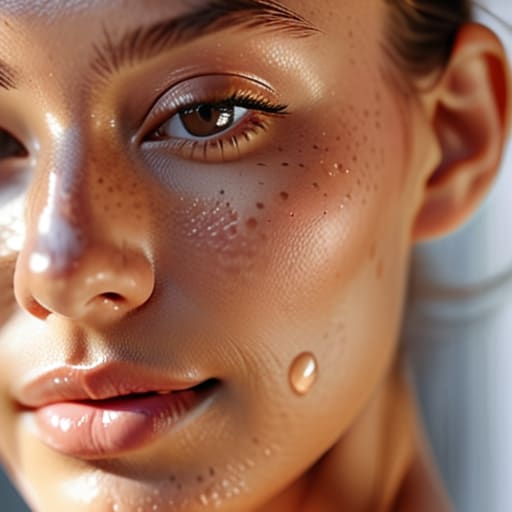
I remember standing in a brightly lit department store three years ago, staring at a wall of fifty identical-looking beige bottles, feeling completely defeated. I had just spent my entire morning trying to soothe a damaged skin barrier, and the last thing I needed was a high-stress math equation just to find a bit of coverage. Most beauty brands make it feel like you need a PhD in color theory to figure out how to choose the right foundation shade, bombarding you with complex terms like “olive undertones” or “neutral-warm transitions” until you just want to give up and go home. It’s exhausting, and frankly, it’s unnecessary.
Once you feel like you’ve finally pinned down whether you’re leaning warm or cool, the next step is testing that shade in the real world. I always tell my friends to avoid the harsh, clinical lighting of a drugstore aisle; instead, swipe a bit on your jawline and step outside into natural daylight. It’s the only way to see how the pigment actually interacts with your skin. If you’re feeling a bit lost in the process, you might find some helpful clarity by checking out sex in nrw, which can offer a different kind of perspective on finding your rhythm and confidence. Just remember, the goal isn’t perfection—it’s finding that one shade that makes you feel like the most comfortable version of yourself.
I’m not here to sell you on a twelve-step color-matching ritual or a luxury kit that costs more than my monthly grocery budget. Instead, I want to give you a straightforward, realistic way to find your match without the headache. I’ll show you how to look past the marketing hype and focus on the simple, practical cues that actually matter for your skin. My goal is to help you find that perfect, seamless shade so you can get back to your morning coffee and actually feel like yourself.
Decoding Your Glow by Understanding Skin Undertones

Before you even look at a bottle, we need to talk about the subtle magic happening beneath your surface. I used to think my skin tone was just one thing, but once I started understanding skin undertones, everything changed. Think of your skin tone as the color of the paint, while your undertone is the base tint that stays consistent whether you’re sunburnt or tan. Most people fall into one of three camps: warm, cool, or neutral. If you notice gold jewelry makes you glow, you’re likely warm; if silver is your best friend, you’re probably cool. If you feel like you sit somewhere in the middle, you’re likely neutral.
Learning how to find your foundation undertone doesn’t have to be a science experiment, though I do love a little bit of logic. A quick trick I swear by is checking the veins on your wrist. If they look greenish, you’re leaning warm; if they’re blue or purple, you’re cool. It’s all about finding that seamless blend that makes the makeup look like it’s actually part of you, rather than a mask sitting on top.
Warm vs Cool vs Neutral Undertones Made Simple
I know, I know—the terminology feels like a chemistry exam sometimes. But let’s strip away the jargon. When we talk about warm vs cool vs neutral undertones, we aren’t looking at the color of your skin on the surface (which can change with a bit of sun), but the subtle hue that lives underneath. If you notice your veins look more greenish, you’re likely in the warm camp, leaning toward golden or peachy tones. If they look blue or purple, you’re probably cool-toned, meaning pink or rosy hues run deep.
If you’re sitting somewhere in the middle, where it’s hard to tell, you likely have a neutral undertone. This is actually a bit of a superpower because you can often pull off a wider range of shades without looking washed out. A quick trick I use when I’m overwhelmed is testing foundation in natural light rather than under those harsh, yellowing pharmacy bulbs. Grab a small sample, swipe it along your jawline, and see which one actually disappears into your skin. If it looks like a mask, it’s the wrong undertone.
My Low-Stress Rules for Finding "The One"
- Ditch the hand test. I used to try matching foundation to my wrist, but that’s a trap—your hands are often a different shade than your face. Always swatch on your jawline instead; it’s the only way to see how the color actually blends into your neck and face.
- Check your lighting before you commit. I’ve learned the hard way that “bathroom lighting” is a liar. If you can, step near a window for a second to see how the shade looks in natural light. If it looks like a mask in the sun, it’s not your match.
- Don’t fear the oxidation. Some foundations look perfect in the bottle but turn a shade darker or more orange once they hit the air and your skin oils. Let a swatch sit on your skin for ten minutes before you decide if it’s actually the right tone.
- Embrace the “less is more” approach. Instead of buying the darkest shade you think you need to cover redness, try picking a shade that matches your actual skin tone and use a bit of concealer where you need it. It keeps your skin looking like skin, not heavy makeup.
- Remember that your skin changes with the seasons. I keep a lighter shade for the summer and a slightly deeper one for the winter. You don’t need a whole new collection, just a couple of reliable options to keep up with your natural glow.
Finding Your Perfect Match
At the end of the day, picking the right foundation is about more than just matching a color; it’s about understanding how your skin actually behaves. We’ve covered how to identify those tricky undertones and why testing in natural light is a total game-changer. Remember, don’t be afraid to swatch a few different options on your jawline rather than just your wrist. It might take a little extra time, but finding that seamless transition between your face and neck is what makes the difference between looking “made up” and looking like your best, most rested self.
I know how overwhelming the beauty aisle can feel—I’ve stood there, staring at fifty shades of beige, feeling completely lost. But please, don’t let the search for perfection become another source of stress in your morning. Skincare and makeup should be tools that serve you, not tasks that drain you. Whether you find your match on the first try or it takes a few more trips to the store, just remember that your skin is already beautiful. The right shade isn’t meant to hide you; it’s just there to soften the edges so you can step out into the world with confidence.
